
In industrial environments, innovation is usually framed as a top-down story: automation, digital twins, advanced materials, AI on the factory floor. That narrative isn’t wrong—it’s just incomplete. A lot of the measurable progress in uptime, safety, and cost control comes from a quieter layer of engineering: the components that connect, lock, seal, and support everything else.
As production lines become more modular and facilities more interconnected, these parts stop being “hardware details.” They become functional junctions that affect assembly speed, maintenance routines, and the probability of a small issue turning into a plant-wide disruption. In real operations, reliability is rarely lost in spectacular ways. It’s lost through ordinary failures at interfaces.
The result is a shift in attention. Teams that design and run industrial systems are spending more time on what used to be considered routine: how things join, how they hold under stress, and how they’re serviced when the clock is ticking.
Reliability Under Pressure: A Key Challenge for Modern Industrial Infrastructure
Modern industrial systems run under a thick set of constraints: tighter safety expectations, variable loads, harsher environments, and less tolerance for downtime. Overbuilding can be as expensive as underbuilding, so the engineering problem isn’t simply “make it stronger.” It’s “make it dependable in the conditions it will actually face.”
Connection points are among the most demanding zones in any system. They experience vibration, thermal expansion, pressure variation, and repeated human interaction during inspections and servicing. When a connection fails, the consequence is rarely isolated. One compromised interface can trigger cascading issues—production stops, quality checks reset, orders slip, and the cost shows up everywhere from overtime to logistics.
That’s why selection criteria have broadened. It’s not just about rated strength or corrosion resistance. Engineers also care about how a connector behaves during installation, how easily it can be verified, and how predictable it is after months—or years—of real-world use.
Stainless Steel in Industrial Systems: Meeting the Demand for Long-Term Durability
Stainless steel remains a staple in industrial environments for good reasons: corrosion resistance, mechanical strength, and—in many sectors—cleanability. But material choice doesn’t automatically translate into robust performance. A high-grade alloy can still be undermined by a poorly designed interface, inconsistent tolerances, or an installation process that invites mistakes.
What matters is how the component is designed to be used. Interfaces built for repeatability reduce variability in the field. They make it easier for technicians to install a connection the same way every time, and easier for supervisors to spot what “right” looks like during checks. In practical terms, that’s not a minor advantage; it can be the difference between a stable system and one that quietly accumulates risk.
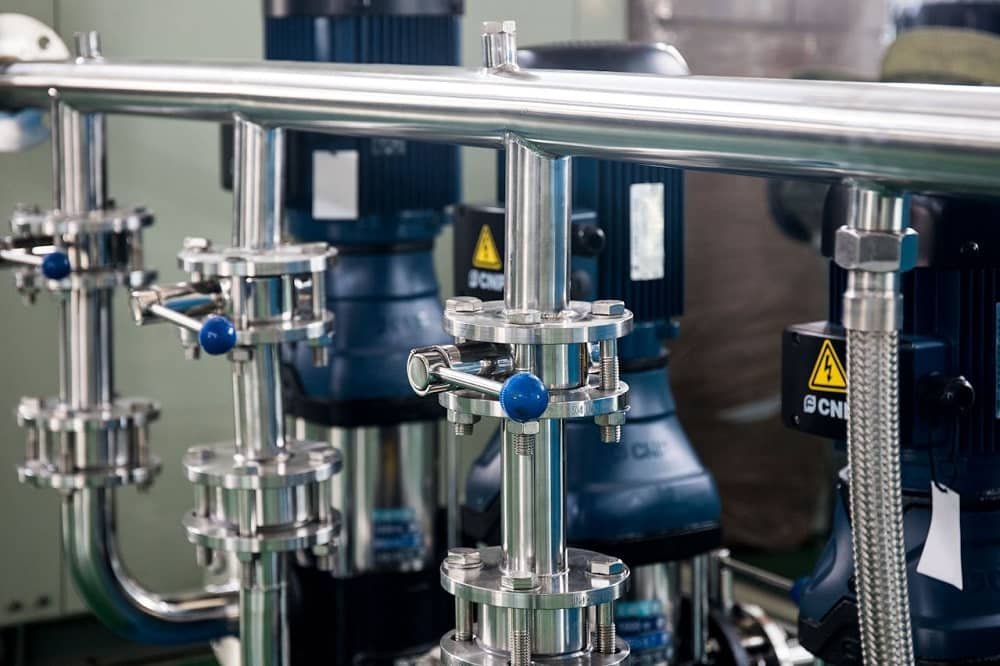
In this context, stainless steel fittings are often assessed less as standalone items and more as part of a broader reliability strategy. The design logic—how a connection is secured, how it’s validated, how it behaves under repeated handling—matters as much as the metal itself.
Designing for Adaptability in Modern Industrial Facilities
Industrial facilities rarely stay in their original configuration. Production volumes change, equipment gets replaced, lines are rearranged, spaces are re-zoned, and compliance requirements evolve. The systems that cope best with this reality are the ones designed for change without losing control.
Connections play an outsized role in adaptability. If a system can be disassembled and reconfigured without compromising integrity—without turning maintenance into a custom fabrication exercise—it supports a more modular model of operation. That becomes important in sectors where requalification and documentation are part of daily life, and where downtime is expensive even when it’s planned.
Adaptability, in other words, isn’t the same as looseness. It’s controlled flexibility: components that allow change while preserving alignment, sealing, and mechanical stability. Over time, that translates into infrastructure that can evolve rather than being replaced.
How Small Engineering Decisions Create System-Wide Impact
Engineering has a recurring lesson: small decisions can carry large consequences. A locking method, a tolerance range, or a choice of interface geometry can feel minor during design reviews. In the field, those choices show up as either friction or flow.
As systems grow more complex, these “minor” points multiply. Reliability isn’t something you can bolt on at the end of a project; it’s built into the system through a series of decisions that define how predictable the system remains under pressure.
That’s why the conversation about industrial innovation has widened. It now includes the fundamentals—connections, fittings, and interfaces—because they’re where reliability either holds or quietly starts to leak.
Where Industrial Innovation Really Happens: Rethinking Core Components
The future of industrial technology will absolutely include smarter software, more automation, and better analytics. But physical reliability still depends on physical realities. Data can tell you a connection is failing; it can’t stop the failure if the interface wasn’t designed to be robust and serviceable in the first place.
When engineers focus on how systems are connected, secured, and maintained, they often unlock improvements that are both immediate and durable. They don’t always look dramatic, but they compound. And compounding is how industrial performance actually improves over time.
Innovation, in the end, isn’t only about new tools. Sometimes it’s about treating the basics as strategic—because that’s where complex systems either stay stable, or don’t.

