
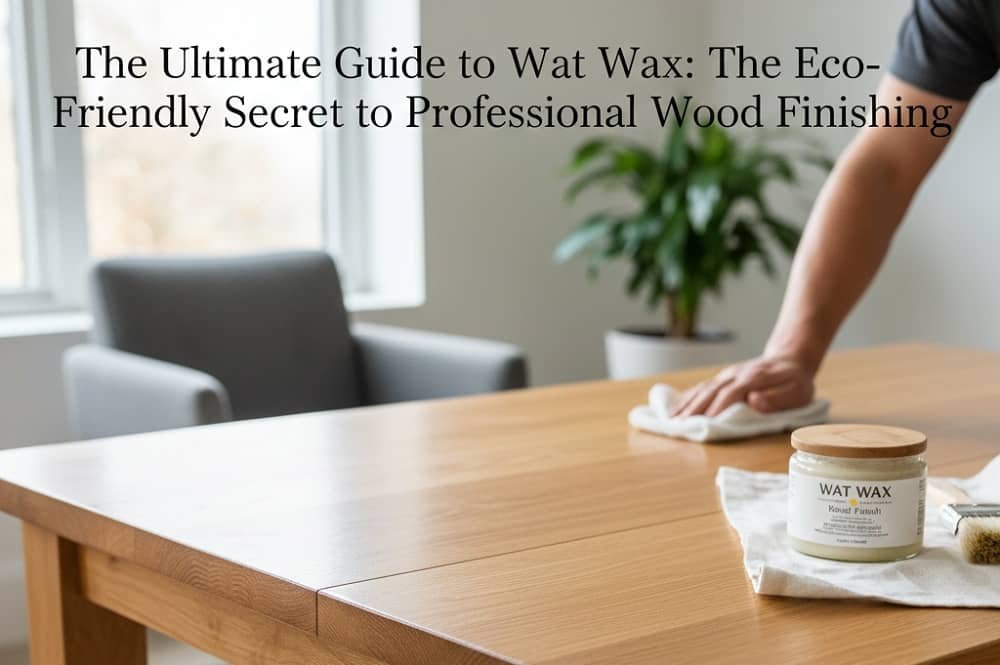
In the world of interior design and furniture restoration, the pendulum is swinging away from high-gloss, plastic-like coatings. Today’s aesthetic—frequently featured here on Trends Buzzer—is all about “honest materials.” We want wood that looks like wood, feels like wood, and breathes like wood.
Enter Wat Wax (often referred to in the industry as ATWAX). This isn’t just another tin of polish; it is a fundamental shift in how we protect our homes. If you’ve been looking for a way to seal your latest DIY project without the headache-inducing fumes of traditional solvents, this guide is for you.
Note: In this guide, ‘Wat Wax’ refers to water-borne wood emulsions (ATWAX), not to be confused with automotive ‘Wet Wax’ or the petroleum industry’s Wax Appearance Temperature.”
What is Wat Wax? The Science of Water-Borne Protection
At its core, Wat Wax is a water-borne wax emulsion. To understand why this is revolutionary, we have to look at the chemistry of traditional furniture wax. For decades, waxes like Carnauba or Beeswax were dissolved in mineral spirits, turpentine, or naphtha to keep them soft enough to spread. As the wax dried, those chemicals evaporated into your home, creating that “classic” (and toxic) paint-thinner smell.
Wat Wax replaces those harsh solvents with a high-tech emulsion process. Micro-particles of hard wax are suspended in a water base using specialized emulsifiers.
Key Ingredients Breakdown:
- Carnauba Wax: Sourced from the Brazilian palm tree, this is the hardest natural wax known to man. It provides the heat resistance and the “pop” in the grain.
- Refined Beeswax: This provides the plasticity and the “soft-touch” feel that makes a piece of furniture feel expensive.
- Emulsifying Agents: These allow the oil-loving wax to live harmoniously with the water-based carrier.
- Microcrystalline Wax: A petroleum-derived (but inert) wax that adds extra water-beading capabilities and durability.
Why the Shift? Traditional vs. Water-Based
If you’ve ever used a traditional paste wax, you know the struggle: the pungent chemical smell, the long wait times for the solvent to “flash off,” and the elbow grease required to buff a hardened shell.
The Advantages
- Eco-Friendly & Non-Toxic: Because the solvent is water, it is generally food-safe (once cured) and much safer for homes with pets and children.
- Faster Drying Time: Water evaporates more predictably than heavy oils. You can often apply a second coat within an hour.
- Non-Yellowing: Many oil-based waxes amber over time. Wat Wax typically stays “water-clear,” preserving the natural color of light woods like Maple, Ash, or Pine.
- Easy Cleanup: You don’t need harsh chemicals to clean your brushes or rags; warm, soapy water usually does the trick.
Top Applications for Wat Wax
While it is primarily a wood finish, the versatility of Wat Wax makes it a staple for various surfaces.
Furniture Restoration
This is the “Trends Buzzer” favorite. Whether it’s a mid-century modern sideboard or a rustic farmhouse table, Wat Wax provides a “close-to-the-wood” feel. It doesn’t look like a plastic coating; it looks like the wood itself has a healthy, hydrated glow.
Chalk Painted Surfaces
If you are into the “shabby chic” look, Wat Wax is the perfect sealer for chalk paint. It penetrates the porous paint, deepening the color and providing a velvet-like sheen that is much more appealing than a flat acrylic sealer.
Leather and Metal
Surprisingly, high-grade Wat Wax can be used to conditioned leather boots or protect metal hardware from oxidation. On metal, it creates a thin, microscopic barrier that prevents moisture from reaching the surface, effectively stopping rust before it starts.
The Professional’s How-To: Master the Application
Applying Wat Wax is different from applying a heavy paste. Because the carrier is water, the “open time” (the time you have to work with it) is slightly shorter.
Step 1: The “Sanding Ladder”
Don’t skip grits! Start at 120, move to 150, 180, and finish at 220. If you are working with a very open-grain wood like Oak, you can go up to 320 to ensure the wax doesn’t just sink into the pores.
Step 2: The Application
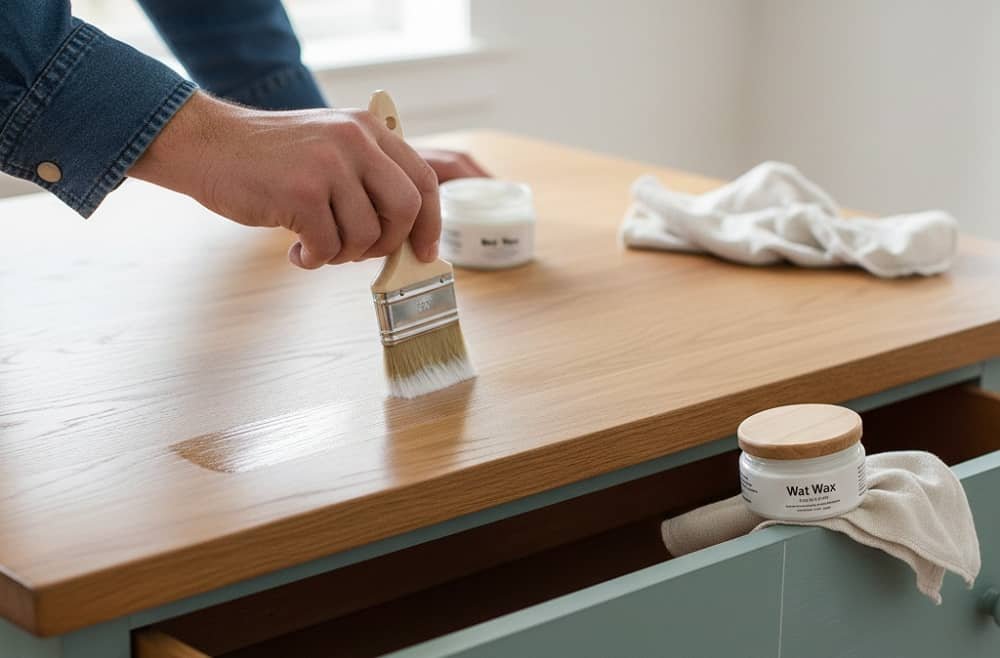
Use a lint-free cotton cloth or a dedicated round wax brush. Work in small sections. Apply the wax in a circular motion to ensure it gets into the grain, then finish with a long stroke <em”>with the grain.
Step 3: The “Flash Off”
Wait for the water to evaporate. You will notice the surface goes from “wet-looking” to a dull, hazy matte. This usually takes 15 minutes.
Step 4: The Power Buff
For a satin look, buff lightly with a cloth. For a “Buzzer-worthy” glow, use a horsehair buffing brush or a drill-attachment buffing pad. The friction heat actually melts the Carnauba slightly, allowing it to level out into a mirror finish.
Maintenance: Keeping the Glow Alive
Unlike a permanent varnish, wax is a “sacrificial coating.” It wears down over time as it protects the surface.
- Daily Care: Use a damp (not soaking) cloth for cleaning. Avoid harsh degreasers or ammonia-based cleaners, as these will strip the wax instantly.
- Re-application: For high-traffic areas like dining tables, re-apply a thin layer every 6 to 12 months. For decorative pieces, once every two years is usually sufficient.
Common Myths About Wat Wax
Myth 1: It’s not waterproof.
- Fact: While it isn’t “waterproof” like a boat sealant, it is highly water-resistant. Spills that are wiped up within 15–20 minutes will not leave a mark.
Myth 2: It can’t be used over oil finishes.
- Fact: You can apply Wat Wax over fully cured oil finishes (like Linseed or Tung oil) to add a layer of sheen and extra protection.
Top 3 Wat Wax Brand Comparison (2026)
“Wat Wax” (or ATWAX) has become a catch-all term for the latest generation of water-based and emulsified waxes. In 2026, the market has shifted away from high-solvent “stinky” waxes toward these cleaner, more versatile formulas.
Below is a comparison of the top three brands currently dominating the space. Each has a slightly different strength—whether you are looking for professional woodworking results, a beginner-friendly DIY project, or an eco-conscious home.
| Feature | Real Milk Paint Co. (Wood Wax) | Liberon (Water-Based Wood Wax) | Fiddes & Sons (Supreme Wax) |
| Primary Base | Water-based, VOC-free emulsion | Water-borne wax oil blend | Environmentally friendly solvent-free blend |
| Best For | Kitchenware & Food-safe surfaces | Large furniture & Flooring | Antique restoration & Fine wood |
| Drying Time | 15–20 minutes | 10–15 minutes | 15–30 minutes |
| Scent | Neutral / Earthy | Very mild / Professional | Virtually odorless |
| Key Advantage | Zero VOCs: Completely safe for children’s toys and cutting boards. | Durability: The “wax-oil” hybrid offers better stain resistance. | Ease of Buff: Known for achieving a “museum-grade” shine quickly. |
| Texture | Soft, butter-like cream | Thin liquid-cream | Traditional soft paste |
Deep Dive into the Top Picks
1. Real Milk Paint Co. (The Eco-Warrior’s Choice)
Their Wood Wax is unique because it uses a proprietary emulsification process that completely removes the need for petroleum-based solvents.
- Why it’s trending: It’s one of the few waxes that can be used on a butcher block or wooden salad bowl without any health concerns.
- Application Tip: Use it over their “Milk Paint” for a truly authentic, 18th-century matte finish that feels modern.
2. Liberon (The Performance Hybrid)
Liberon has stayed relevant by evolving their formula into a “Water-Based Interior Wood Wax Oil.” This product is the heavy-hitter of the group.
- Why it’s trending: It doesn’t just sit on top of the wood; it penetrates like an oil and protects like a wax. It’s the go-to for coffee tables where water rings are a constant threat.
- Application Tip: It’s slightly thinner, so apply with a foam brush for a perfectly streak-free finish on large flat surfaces.
3. Fiddes & Sons (The Professional’s Secret)
Fiddes is a legacy brand that successfully transitioned to water-borne technology without losing its reputation among high-end cabinet makers.
- Why it’s trending: It has the highest concentration of Carnauba wax in its category, meaning it buffs to a higher “mirror” shine than almost any other water-based product.
- Application Tip: Use a “0000” grade steel wool (or a synthetic equivalent) to apply the wax. This helps the wax “bite” into the surface for a more permanent bond.
Summary Checklist for Buyers
When choosing between these, ask yourself:
- Is it for a food surface? Go with Real Milk Paint.
- Is it a high-traffic table? Go with Liberon.
- Is it a decorative heirloom? Go with Fiddes & Sons.
At a Glance: Is Wat Wax Right for You?
Before you head to the hardware store, here is the breakdown of why this product is trending and where it might fall short compared to traditional polyurethanes.
The Pros (Why We Love It)
- Eco-Friendly: Significantly lower VOC (Volatile Organic Compound) levels. It’s better for your lungs and the planet.
- Invisible Protection: Unlike thick varnishes, Wat Wax preserves the “raw” look of the wood. It doesn’t look like plastic; it looks like expensive timber.
- Beginner Friendly: It is incredibly hard to “mess up.” If you apply too much, you simply buff it away. No drip marks or bubbles.
- Fast Turnaround: You can wax a piece of furniture in the morning and have it back in your living room by the afternoon.
- Food Safe: Most modern water-based emulsions are safe for surfaces that come into contact with food (once fully cured).
The Cons (The Trade-offs)
- Heat Sensitivity: Like all waxes, it can soften if you place a piping-hot pizza box or coffee mug directly on it without a coaster.
- Not “Forever”: It requires a maintenance coat every 12–24 months. It isn’t a “set it and forget it” finish like lacquer.
- Chemical Vulnerability: Strong household cleaners (like Windex or Clorox wipes) will strip the wax, leaving the wood dull and unprotected.
- Sheen Limits: While you can get a beautiful satin glow, you will never achieve the “glass-like” high gloss of a poured resin or professional spray lacquer.
Pro-Tip for Trends Buzzer Readers
If you are working on a piece of furniture that will see heavy use (like a dining table or a desk), we recommend applying a thin layer of water-based sealer first, then using Wat Wax as your final “beauty coat.” This gives you the durability of a sealer with the tactile, luxury feel of a wax.
Frequently Asked Questions about Wat Wax
1. Is Wat Wax (ATWAX) the same as regular furniture wax?
Not exactly. While both provide protection and sheen, traditional furniture waxes are solvent-based (using petroleum distillates). Wat Wax is a water-based emulsion. This means it has almost no odor, dries faster, and won’t yellow over time like many solvent-based pastes.
2. Can I apply Wat Wax over an existing finish?
Yes! Wat Wax is highly versatile. It can be applied over:
- Chalk Paint: To seal the porous surface.
- Milk Paint: To add a soft glow.
- Fully Cured Oil or Varnish: To add an extra layer of protection and improve the “hand-feel” of the piece.
- Note: Just ensure the surface is clean and free of oils or silicone-based polishes first.
3. How long does it take for Wat Wax to cure?
While it feels dry to the touch in 15–30 minutes, “curing” is a longer process. It usually takes 24 to 72 hours for the wax to fully harden and reach its maximum water resistance. We recommend avoiding heavy use or placing liquids on the surface during the first 3 days.
4. Is Wat Wax safe for baby furniture and toys?
Generally, yes. Because it uses water as a carrier instead of harsh chemicals, many brands (like Real Milk Paint Co.) are rated as non-toxic and VOC-free. Always check the specific manufacturer’s label for “Toy Safety Standard” or “Food Safe” certifications to be 100% sure.
5. Can I use Wat Wax on outdoor furniture?
It is not recommended for permanent outdoor use. Water-based waxes are designed for interior climate-controlled environments. Extreme heat can melt the wax, and heavy rain will eventually wash the emulsion away, leaving your wood vulnerable to rot.
6. How do I remove Wat Wax if I want to repaint?
If you decide to change the look of your piece later, you can remove the wax by wiping the surface with mineral spirits or a dedicated wax remover. Since it’s water-based, a strong solution of TSP (Trisodium Phosphate) and warm water also works well to strip the surface back to bare wood.
7. Does Wat Wax expire?
Water-based products have a slightly shorter shelf life than solvent-based ones because they contain water which can eventually evaporate or, in rare cases, develop mold if contaminated. Typically, a sealed jar of Wat Wax is good for 12–24 months. Store it in a cool, dry place and never let it freeze!
The Verdict: Is It Worth It?
For the modern DIYer, Wat Wax is an indispensable tool. It offers the beauty of traditional woodworking finishes with the safety and ease of 21st-century chemistry. It preserves the soul of the material while making the application process a joy rather than a chore.
If you are looking for that “magazine-ready” look for your next home project, a jar of Wat Wax is likely your best investment this year.

