
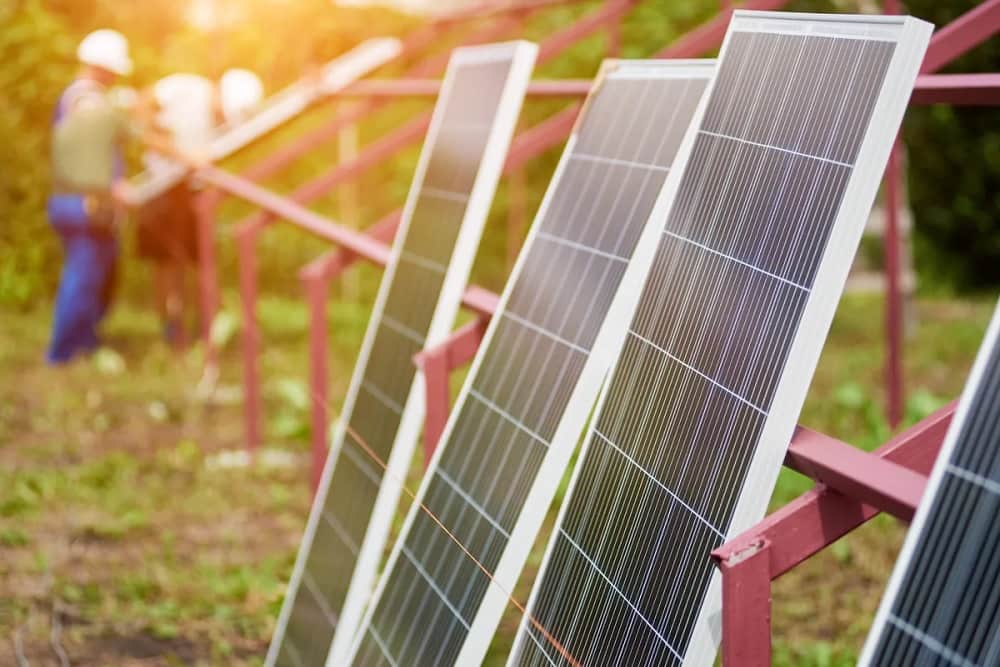
Honestly, being up there standing on the roof in front of a hot, concrete slab of the roof in the heat of summer while looking at the twisted, fading solar panel array installed barely eighteen months ago… it does something to you.
Back in those days when my job was as an industrial project manager I was involved in the project of setting up a huge warehouse outside Pune. Our goal was not only to meet the targets for producing green/ clean energy through our operations but also to spend a bare minimum amount on capital expenditure. Eventually, our procurement team, who have their heads in the clouds, got us those very cheap, low-voltage cables along with the brand of equipment that wasn’t on anyone’s list. The only thing their work could give was paperwork, and the signature was there. I used to say, “Well, a copper cable is the same as any other copper cable is it? We saved almost thirty percent on materials.
Well, we definitely paid for that thought quite a bit.
In the middle of commissioning, at the time of peak load, our main cable tray was generating heat like an oven and there was nothing we could do about it. We stopped the entire facility at once while looking into what caused it. And the answer? Insult was that the conductor had bad purity, and the isolation was not up to the mark which led to a huge power loss in the form of $I2R$ that caused the electricity to be changed to a potential fire hazard.
Not only did we have to replace all that cable by tearing them out and replacing them, our project timeline was delayed by two months. In the end, it amounted to five times the amount we had saved initially.
We got to our “aha!” moment after that. It totally changed my idea of how I approached sourcing electrical equipment. So whether you are running a large factory of mega-megawatts or just wanting to cut down the electric bill, it is a fact that cheap is the least expensive way but in most cases, it is the most costly one.
If you are looking for affordable home solar panels in India, these are the kind of mistakes people make. The temptation to hit a very low bid by a local flyer is great. But, believe me, you can find out a high-quality solar system among all the market competition that you can trust without putting too much of your budget. This guide is your blueprint to achieving this.
The Price-Value Paradox of Home Solar
As you make the decision to switch from grid electricity to solar home power, don’t think that it is just buying the hardware only. Because you are actually going to have your own mini power plant on your roof, and it needs to be safe and energy-efficient for decades. This is not a short-term arrangement.
By the way, the Indian solar panel market is just overflowing with options! There are top-tier international leaders, reliable domestic manufacturers, and a whole lot of disorganized market players selling deals that just seem too good.
You can be sure of one thing-when a deal appears a blessing from above in the form of miraculous power saving, it usually leads to a disaster after a period. It is nothing but a financial mine.
I think to get the optimal balance, we need to start thinking differently. Our focus should shift from “looking at what we pay immediately” to “looking at how much we gain in the long run” (Investment Return). In the field industrial world, we usually split benefits into two main types- operational efficiency and strategic resilience.
- Operational savings mean you will see almost instant reductions in your monthly utility bills by switching to solar.
- Strategic value means your solar system will not lose fifty percent of its original efficiency in five years, will not need frequent repair, and will not be a safety hazard during heavy storms.
However, if your sole target is to decrease the upfront cash expenditure, you will end up sacrificing strategic value, leading to a significant need for maintenance which will eat away your savings.
Navigating the Technical Aspects: Features that Are Worth the Investment
If you are looking to hire a solar panel installer, first you should be able to decipher the technical specs so you will have a fair idea about what you are getting into. Now, let’s take a closer look at the core of a residential solar system and figure out what is worth splurging on and what not.
Panel Tech: Mono-PERC versus Polycrystalline
These technical terms will be commonly used by solar panel salespeople. Earlier, polycrystalline panels, those bluish and speckled ones, were the standard for budget solar installations. Their prices were low but so were their efficiencies which ranged around 15%-17% percent.
Monoracial PERC (Passivated Emitter and Rear Cell) and TOPCon (Tunnel Oxide Passivated Contact) technologies today are the most advanced in the solar panel world. Apart from black and elegant, they achieve a conversion efficiency of 21+% percent or more.
However, the main point is that if you are hunting out Affordable Home Solar Panels you don’t have the excuse or reason to buy tier-three, non-brand modules that lose their capacity faster than cheap cellphone batteries. Due to the massive global manufacturing scale, the price disparity nowadays between a premium Mono-PERC and an outdated Poly panel is extremely narrow.
Important Note: Please always refer to the Temperature Coefficient on the panel’s documentation or specifications sheet. In Indian climate, rooftop temperatures during summer can easily hit 50+ degree which in turn will lower your panel capacity. High-grade Monos can boast a temperature coefficient of around -0.35% meaning that their generating capacity remains relatively stable during hot summers. However, budget-level ones will have a fast degradation with increasing temperature so, one should be cautious about these.
The Inverter: The Undetected Brain of the Solar System
If the solar panels are supplying the power, the inverter adds intelligence
Solar power inverters are devices that convert the electricity from the solar panels from DC (direct current) to AC (alternating current), making it suitable for powering your home’s appliances. When it comes to getting Affordable Home Solar Panels, the point where your major research and decision effort should be concentrated is on the inverter. Cheating here is an invitation to a complete disaster. The inexpensive inverter that has been placed poorly and not well ventilated is going to give you troubles within 3-5 years and thus completely negate your savings from solar panels.
- On-Grid (String) Inverters: The least expensive option if you have continuous uninterrupted power supply from the grid. They are sturdy, efficient, and straightforward enough to replace if there is a problem.
- Micro inverters: More costly initially but if a part shade occurs on a sunny surface (e.g., a large tree or neighbor’s water tank), they ensure a single shaded panel doesn’t bring the whole power output down.
- Hybrid Inverters: If you experience frequent blackouts and you plan to install a battery storage system too, that would be the option for you to go with hybrid inverter which will handle the power coming simultaneously from the grid, solar and the battery.
Mounting System & Cables: The Supporting Cast
Do not allow your installer to mount the panels using cheap, painted steel structures only. Rooftops are pretty hard on equipment. In just two rain seasons, rust can take over the structure and that will weaken the entire system and at worst create a dangerous situation in high wind.
Get a firm on hot-dip galvanized iron (GI) with a minimum of 80 microns coatings or high-grade anodized aluminum. Also, check their solar cables are solar specific, such as UV-resistant dedicated DC solar cables (e.g., cross-linked polyethylene cable, known as XLPE cable). Do not get tricked for the sake of saving a few bucks to buy wires that are meant for households as the UV will soon make them crack leading to ground faults and fire hazards!
Sourcing Strategies: How to Save More Without Purchasing Cheap Stuff
We will talk about practical, how-tos here. We should figure out a way the lowest possible cost of our solar system while maintaining core technical requirements. We can refer to several of those strategies used in corporate B2B purchasing!
“Pilot First” Phased Scaling A Proven Method
In the field of enterprise computing, organizations usually avoid using an unfinished platform in all offices without any pilot test. Their practice is that they get a pilot done first and only if it’s a success do they scale. This method of “begin from small, prove your case, expand” proves to be really great when coming over to affordable home solar panels, the topic of our article today!
Instead of going all out on your budget and purchasing a 10 kWh large-scale hybrid system with expensive Lithium ion batteries, you might want to go for a grid-connected system first and later on upgrade or adding batteries.
- There is a much lower initial cost.
- In cases where you are in a state which supports net-metering, you can use it to give your excess power back to the grid in exchange for credits.
- You get to learn your patterns, how much power per day you generate and when your household needs most power. If you need it to be bigger than 3 kW or want to include storage, you can comfortably plan to budget it all at once later! Your house or your business is your priority and not only the system.
Hybrid Installer Model
Digital transitions often happen with the use of a hybrid model: internal team takes charge of running with minimal support while the external consultants work on delivering changes rapidly.
You, as a home-owner, might find yourself in a position that allows you to do the same thing. A few home-owners end up buying the so-called “all-in-one” white-label kits from small, fly-by-night local shops. These places combine cheap modules, unbranded inverters and the lowest grade structures to make a single cheap product.
On the contrary, become your personal strategic procurement officer:
- Acquire your solar modules & inverters from tier 1 (or at least tier 2) manufacturers which should be certified by your government body (e.g., BIS). E.g.: Waaree, Adani, Tata solar modules and Growatt, Sungrow, or Havells/Lloyd branded inverters.
. This way you ensure you get only the genuine products through genuine suppliers. - Get a local solar EPC service done through a professional company which is registered and certified strictly for the design, installation, structural engineering and commissioning.
By doing so, you end up getting high-performance, warranty-covered equipment along with the skills to be able to do the local installation.
In the business world, speed is among the most powerful differences; companies which delay implementing new efficiencies or delaying responding to changes in market quickly become vulnerable to more flexible competition.
In residential solar, delaying making a decision will silently affect your budget very deeply. Each and every month you spend time deciding, researching solar energy, waiting for the price of solar to drop so you get a great bargain, it is the period of your total retail electricity tariff to the utility company.
The Indian government, through its ambitious “PM-Surya Ghar: Muft Bijli Yojana” subsidy scheme, is at the moment supporting residential solar installation with an unprecedented financial grant (up to ₹78, 000 subsidy for a 3kW system). These subsidies and the favorable net-metering policies will not remain so attractive forever. As utility grids get adapted to a high solar penetration, regulators worldwide tend to lower feed-in tariffs and reduce incentives. Getting moving now ensures getting high returns and protects you from the inevitable grid tariff increases.
Decoding Solar Regulatory and Subsidy Rules in India
It’s not possible to discuss solar affordability in India without discussing the government. The regulatory system in the country is quite complicated however obeying laws will result in great financial savings for you.
ALMM: Mandatory to Get a Subsidy
The Ministry of New and Renewable Energy (MNRE) administers the ALMM (Approved List of Models and Manufacturers) solar panel catalog. In order to collect the central government subsidy, the solar panels must be registered in the ALMM list.
This is one of the most important sourcing factors:
- Absent are not many of the panels approved on the ALMM list that are made in a factory outside of India.
- BIS rigorous checks must be met for them.
- If an installer is trying to convince you to buy super cheap non-Indian panels that are not listed on the ALMM, say no, unless you want to give up your government subsidy completely.
How to Earn Money from Solar Power, Net Metering
With the help of Net Metering, solar power for residential homes becomes profitable. At times when the solar panel generates more power than consumed (which usually happens during the day when family usage is quite low), the excess power get fed back to the grid.
The meter of the utility company literally goes backwards and the customer gets a credit for the exported electricity. At the end of the billing cycle, you are charged only for the electricity consumed over the period. It is the net electricity consumption which determines the charges.
In addition to a technical understanding of the system and the financial benefit, you will need access to a dedicated contact person who will help you to go through the process of getting the net-meter approval with your state’s power distribution company (for example, MSEDCL, BESCOM/TNEB, Tata Power) if you decide to buy the equipment and installation services from a single vendor. You need to be sure in this case that the company is fully handling the entire process of getting a net-meter from the state power board.
Even a small omission can lead to your net-meter not being turned on for months. Meanwhile, you will produce green power, but you will not get reimbursed for feeding electricity back to the grid.
Know the Payback Period, How to Estimate the Real Rate of Return
Let’s consider an example of what would be an actual cost-effective situation to install solar panels for a homeowner, a standard middle-class Indian consumes about 350 to 400 units of electricity (kWh) monthly.
If you go for high-quality and grid-tied 3kW solar:
- Average Daily Yield: 12-15 Units (varies based on your location & roof shadow).
- Average Annual Yield: Around 4,500 Units:
- Approximate Total Cost of the system (without subsidy): 1,50,000 to 1,80,000 (Tier-1 ALMM panels + high-quality string inverter).
- PM-Surya Ghar Subsidy: 78,000.
- Net Investment: 72,000 to 1,02,000.
Saving calculation.
- Generating 4, 500 units with an average electricity charge of ₹8 per unit, will enable you to save a total of ₹36, 000 every year.
- Assuming the total outlay to be ₹87, 000 (median), the break-even period works down to around 2.4 years, which is quite good.
The solar panel system will fully recover your investment in a bit over two years. For the other 22-plus years of the panels under warranty, essentially all of your electricity will be free.
So, you have to seriously stop and see what you would choose between an unreliable, second-rate, ₹60, 000 system even after a huge government subsidy (if at all it can be available), that would lose the maximum capacity by 5% every year, break down the inverter by year three, and demand continuous servicing or a well-made, branded, highly reliable, and low-maintenance solar system costing only ₹20, 000 more in upfront but will hardly raise any issues for a full twenty years.
You’re Better Off Buying the Premium System!
To wrap it up, when making an investment in Solar Energy, what is crucial is, instead of the initial cost of the product, your long-term satisfaction, comfort, and savings. It means that you have to carefully examine what are reasonable compromises and where it is necessary to stay firm on the quality.
Don’t take a gamble on the standard of your cell panels and the inverter’s reliability; do your research. Rather, you can get the most out of the government subsidy, plan for a gradual expansion that begins with a small solar setup, and get a group of professional, local providers who can handle the job.
I guess, you should see it more or less in the same way you would a very good industrial product. If you are strict and responsible during its procurement stage as a professional engineer you would probably get a high-quality product and in exchange for that, you will get clean, free, and limitless solar-powered electricity for twenty plus more years.
Well, have you ever done this, looked closely at your rooftop, examined your monthly power bill, and decided that you want to go solar power and start your life with less dependency on the grid? Come on now! You are fully capable of making this shift.

