
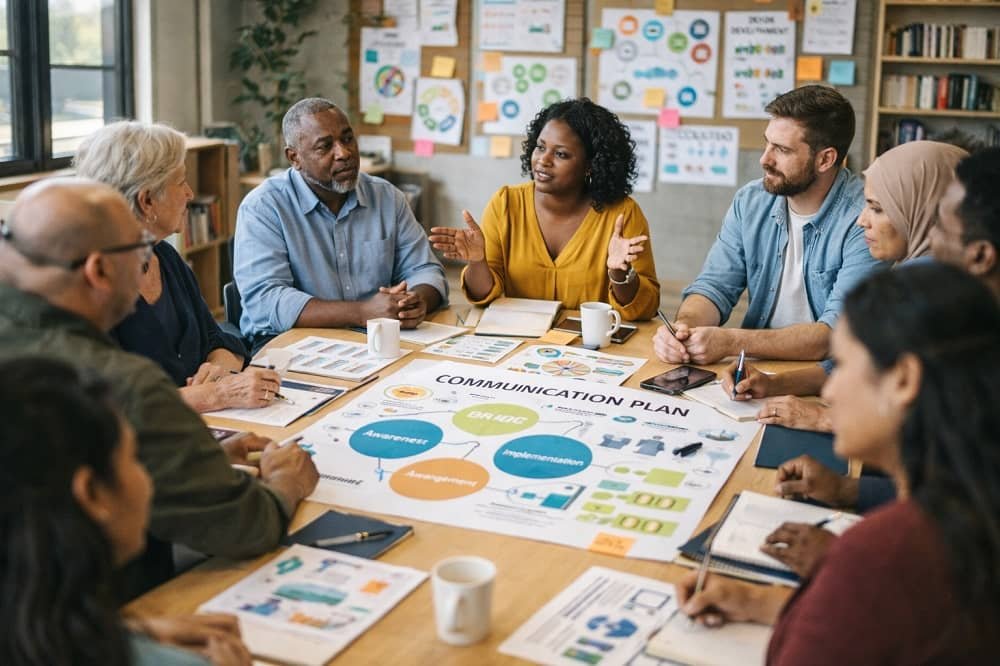
In an era where information flows faster than ever, the way we communicate about development initiatives can make or break their success. Development support communication isn’t just another buzzword in the international development sector—it’s a fundamental shift in how organizations, governments, and communities approach social change.
Unlike traditional top-down communication strategies that treat communities as passive recipients of information, development support communication places people at the center of the conversation. This participatory approach has transformed countless lives across continents, from rural farming communities in Sub-Saharan Africa to urban neighborhoods in Southeast Asia.
What Is Development Support Communication?
Development support communication (DSC) represents a strategic communication approach designed to support and facilitate sustainable development initiatives by empowering communities to participate actively in their own development processes. Rather than simply broadcasting messages, development support communication creates dialogue, builds capacity, and ensures that development projects respond to genuine community needs.
At its core, development support communication recognizes that lasting change cannot be imposed from outside. When communities become active participants in identifying problems, designing solutions, and implementing programs, development initiatives achieve far greater success and sustainability.
The Food and Agriculture Organization (FAO) pioneered this approach in the 1980s, recognizing that agricultural development projects often failed because they didn’t adequately engage with farmers and rural communities. This realization sparked a revolution in how development organizations think about communication.
The Evolution: From Top-Down to Participatory Communication
The journey of development support communication reflects broader changes in how we understand social change. For decades, development programs followed a modernization model—experts from developed countries would design solutions and communicate them to “backward” communities who were expected to adopt new behaviors.
This approach failed spectacularly. Agricultural projects introduced crops that communities couldn’t sell. Health campaigns promoted behaviors that clashed with cultural practices. Educational programs taught skills that had no local application.
Development support communication emerged as a response to these failures. By the 1990s, organizations implementing development support communication began seeing dramatically different results. Projects that engaged communities in meaningful dialogue achieved adoption rates three to four times higher than traditional campaigns.
This shift wasn’t just about being nicer or more inclusive—it was about recognizing that communities possess invaluable knowledge about their own contexts, challenges, and resources. Development support communication treats this local knowledge as essential, not optional.
Core Principles of Development Support Communication
Participation Over Persuasion
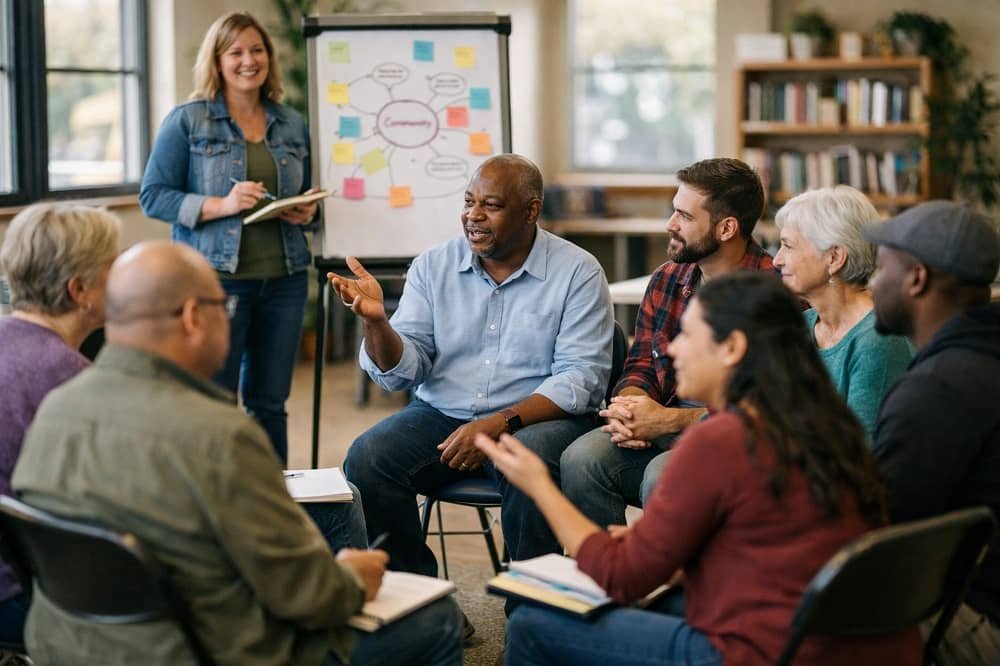
Traditional communication campaigns aim to persuade people to change their behavior. Development support communication takes a fundamentally different approach by creating spaces where communities can analyze their own situations, identify problems, and design solutions collaboratively.
This participatory emphasis means that development support communication practitioners spend more time listening than talking. They facilitate discussions rather than delivering lectures. They ask questions that prompt critical thinking rather than providing ready-made answers.
Empowerment Through Dialogue
Development support communication aims to build community capacity for ongoing problem-solving, not just address immediate issues. When communities engage in structured dialogue about development challenges, they develop skills in critical analysis, democratic decision-making, and collective action that extend far beyond any single project.
This empowerment focus distinguishes development support communication from other communication approaches. The goal isn’t compliance with a predetermined program—it’s building communities’ ability to identify and address their own development needs sustainably.
Cultural Context Matters
Development support communication insists that effective communication must be deeply grounded in local cultural contexts. This means using local languages, respecting traditional communication channels, and understanding how culture shapes people’s perceptions of development issues.
Practitioners of development support communication often work with local artists, storytellers, and community leaders to ensure messages resonate with cultural values and social norms. A health campaign might incorporate traditional music and theater rather than relying solely on posters and pamphlets.
Real-World Applications and Success Stories
Agricultural Development Programs
One of the most compelling demonstrations of development support communication’s power comes from agricultural extension programs in East Africa. Traditional extension services struggled with low adoption rates despite decades of effort. When organizations shifted to development support communication approaches, results transformed.
In Kenya, a participatory video project using development support communication principles helped farming communities document and share their own agricultural innovations. Farmers filmed themselves explaining locally adapted techniques, then showed these videos to neighboring communities. Adoption rates for sustainable farming practices increased by 65% compared to conventional extension methods.
Public Health Campaigns
Development support communication has revolutionized public health interventions in resource-limited settings. In India, community radio stations using development support communication approaches helped rural villages address maternal and child health issues. Rather than broadcasting health information, these programs featured community members discussing their own experiences, concerns, and solutions.
The results were remarkable. Villages with access to these participatory radio programs showed 40% improvements in prenatal care utilization and 35% reductions in child malnutrition compared to control villages receiving traditional health education.
Environmental Sustainability Initiatives
Climate change adaptation and natural resource management present perfect opportunities for development support communication. These complex challenges require sustained community engagement and long-term behavioral change—precisely what development support communication excels at facilitating.
In the Philippines, coastal communities used development support communication methods to address declining fish stocks. Through facilitated dialogues, community members analyzed fishing practices, identified unsustainable behaviors, and collaboratively designed marine protected areas. Because the solutions emerged from community discussions rather than external mandates, compliance rates exceeded 90%.
Key Strategies and Methodologies
Participatory Rural Communication Appraisal (PRCA)
Participatory Rural Communication Appraisal represents one of the most widely used development support communication methodologies. PRCA combines visual techniques, group discussions, and mapping exercises to help communities analyze their communication needs and resources.
Rather than conducting surveys or formal interviews, PRCA facilitators work with communities to create visual representations of information flows, communication channels, and knowledge gaps. This participatory process ensures that development support communication strategies align with how communities actually communicate.
Multi-Channel Approaches
Effective development support communication recognizes that people receive and process information through multiple channels. Successful programs typically combine interpersonal communication (community meetings, peer discussions) with mass media (radio, posters) and increasingly, digital platforms (mobile messaging, social media).
The key to multi-channel development support communication is ensuring consistency while adapting messages to each medium’s strengths. A nutrition program might use radio dramas to raise awareness, community discussions to build knowledge, and mobile messages to provide timely reminders.
Community-Led Communication
The most sustainable development support communication initiatives transfer communication ownership to communities themselves. This might involve training community members as peer educators, supporting local radio production, or helping communities create their own communication materials.
When communities control their own communication processes, development support communication becomes self-sustaining. Projects end, but the communication capacity remains, enabling communities to address new challenges as they emerge.
Challenges in Implementation
Despite its proven effectiveness, development support communication faces significant implementation challenges. The participatory nature of development support communication demands more time and resources than traditional communication campaigns. Organizations accustomed to rapid, measurable outputs often struggle with development support communication’s emphasis on process and capacity-building.
Power dynamics present another persistent challenge. Development support communication aims to create equal dialogue between communities and development organizations, but real power imbalances don’t disappear simply because we adopt participatory methods. Practitioners must actively work to level these dynamics—a complex, ongoing process.
Measurement also poses difficulties. While traditional campaigns can count messages delivered or awareness increased, development support communication focuses on less tangible outcomes like community empowerment and communication capacity. Demonstrating impact requires more sophisticated evaluation approaches.
The Future of Development Support Communication
Digital technologies are transforming development support communication in profound ways. Mobile phones have reached even remote communities, creating new possibilities for participatory communication. Platforms like WhatsApp enable peer-to-peer knowledge sharing at scale, while smartphones allow communities to create and distribute their own multimedia content.
However, technology alone doesn’t guarantee participatory outcomes. The challenge for development support communication in the digital age is ensuring these tools genuinely empower communities rather than creating new forms of top-down communication.
Climate change adaptation represents perhaps the most urgent frontier for development support communication. As communities worldwide confront unprecedented environmental challenges, they need communication approaches that build adaptive capacity and support locally appropriate solutions—precisely what development support communication offers.
How to Implement Development Support Communication in Your Organization
Organizations interested in adopting development support communication should start by examining their existing communication approaches. Ask critical questions: Do we listen more than we talk? Do communities shape our messages, or do we shape theirs? Do our communication strategies build local capacity?
Building staff capacity represents a crucial investment. Development support communication requires different skills than traditional communication work—facilitation rather than presentation, analysis rather than persuasion, patience rather than efficiency. Training programs should emphasize these participatory competencies.
Start small with pilot projects that demonstrate development support communication’s value. Document successes carefully, showing not just outputs (messages created) but outcomes (community capacity built). Use these cases to advocate for broader organizational adoption.
Partner with organizations that have deep development support communication experience. The FAO, UNICEF, and many specialized NGOs offer resources, training, and technical support for organizations beginning their development support communication journey.
Frequently Asked Questions About Development Support Communication
Q1: How does development support communication differ from regular communication campaigns?
Development support communication emphasizes participation and dialogue over one-way message delivery. While traditional campaigns broadcast information to passive audiences, development support communication creates spaces for communities to analyze problems and design solutions collaboratively. The focus shifts from persuading people to change behaviors to empowering communities to identify and address their own development needs.
Q2: What skills do practitioners need for development support communication?
Effective development support communication requires strong facilitation skills, cultural sensitivity, active listening abilities, and comfort with participatory methodologies. Practitioners should be able to create safe spaces for dialogue, ask probing questions that promote critical thinking, and help communities analyze complex issues. Technical communication skills matter less than the ability to enable community-led communication processes.
Q3: How long does a development support communication project typically take?
Development support communication prioritizes sustainable change over quick results, so projects typically require longer timeframes than traditional campaigns. Initial community engagement and relationship-building alone might take 3-6 months. Complete projects often span 1-3 years, though the communication capacity built remains long after formal projects end. Organizations must be prepared to invest time in participatory processes.
Q4: Can development support communication work in urban settings?
Absolutely. While development support communication originated in rural contexts, its principles apply equally to urban development challenges. Urban applications might focus on neighborhood improvement, public health, or environmental sustainability. The participatory methodology adapts well to diverse settings, though urban implementation may require different techniques to accommodate higher population density and greater diversity.
Q5: How do you measure the success of development support communication?
Success metrics for development support communication extend beyond traditional communication measures. While tracking reach and awareness remains important, evaluators also assess community participation levels, locally-led initiatives emerging from dialogues, communication capacity development, and sustainability of behavior changes. Qualitative methods like participatory evaluation and community storytelling often prove more revealing than quantitative metrics alone.
Q6: What role does technology play in modern development support communication?
Digital technologies enhance development support communication by enabling broader participation, facilitating peer-to-peer knowledge sharing, and allowing communities to create their own content. Mobile phones, community radio, and social media platforms can amplify participatory processes. However, technology must serve participatory goals—development support communication resists using digital tools simply to broadcast messages more efficiently without genuine community engagement.
About This Article
This comprehensive guide to development support communication draws on peer-reviewed research, case studies from leading development organizations, and established methodologies from institutions like the Food and Agriculture Organization (FAO) and UNICEF. The content reflects current best practices in participatory development communication as practiced by international development professionals worldwide.
Last Updated: February 2026
| Reviewed By: International development communication specialists
| Sources: FAO Development Support Communication resources, academic research in participatory communication, field studies from development practitioners
Conclusion
Development support communication represents more than a methodology—it’s a fundamental reimagining of how social change happens. By placing communities at the center of communication processes, development support communication transforms people from passive beneficiaries into active agents of their own development.
The evidence is clear: when development initiatives embrace the participatory principles of development support communication, they achieve dramatically better outcomes. Projects become more relevant, more sustainable, and more effective at building the local capacity that enables communities to address future challenges independently.
As we face increasingly complex global challenges—from climate change to health crises to persistent poverty—the need for effective development support communication has never been greater. The approach offers a proven path forward, one that respects community knowledge, builds local capacity, and creates lasting change from the ground up.
For organizations and practitioners ready to embrace this transformative approach, the journey begins with a simple but profound shift: from talking at communities to listening with them, from designing for people to creating alongside them. That shift makes all the difference.

