
Most people see a pump as a finished machine. A motor. A casing. Bolts tightened. Paint applied. Commissioned and forgotten.
Engineers know better.
A pump’s long-term performance is decided long before assembly. Long before alignment checks. Long before the first startup vibration reading.
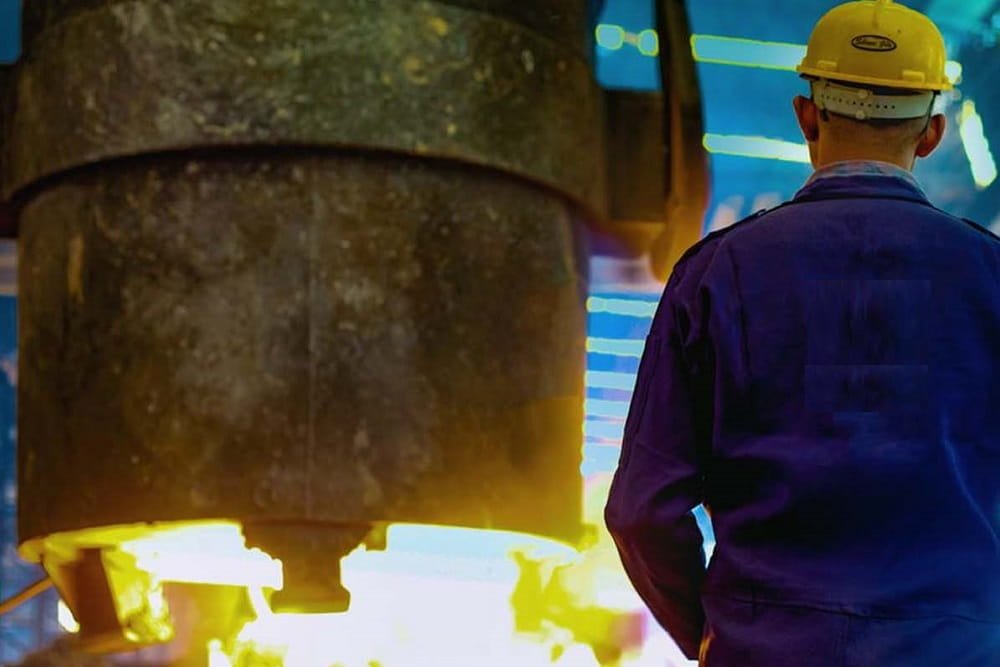
It is decided when molten metal solidifies.
The real engineering — the kind that determines whether a pump survives five years or fifteen — is buried inside the casting itself. And that’s where serious attention to castings for pump components becomes non-negotiable.
It Starts with Flow, Not Metal
Before a single mold is prepared, engineers are thinking about fluid behavior.
- How will the liquid enter?
- How will it accelerate?
- Where will turbulence try to form?
- Where will pressure concentrate?
Impellers, volutes, diffusers — every pump component is shaped around controlling energy transfer. That geometry cannot drift. It cannot “almost” match the design.
If blade curvature is inconsistent, hydraulic efficiency drops.
If internal wall thickness varies unpredictably, stress distribution shifts.
If balance is imperfect, vibration increases.
The hidden engineering begins in ensuring the casting replicates the intended geometry with discipline.
Because fluid doesn’t forgive approximation.
Grain Structure: The Silent Determinant
You won’t see grain structure once the casting is machined and painted. But it decides fatigue resistance, crack propagation behavior, and thermal stability.
- Controlled pouring temperature.
- Proper feeding design.
- Managed cooling rates.
These aren’t decorative process steps. They define how metal solidifies at a microscopic level.
Uniform grain formation reduces internal stress concentration. Proper heat treatment stabilizes the structure for long-term mechanical loading.
When manufacturers invest seriously in castings for pump components, they’re not just buying shape. They’re buying metallurgical predictability.
And predictability is what keeps pumps running year after year.
Wall Thickness Is Not Guesswork
Overdesign used to mean safety. Make everything thicker. Add mass. Hope it survives.
Modern engineering rejects that laziness.
Pump components today are optimized — thick where stress analysis demands, lean where weight reduction improves efficiency. But that optimization only works if casting precision holds.
Uneven wall sections create differential cooling. Differential cooling creates internal stress. Internal stress eventually becomes distortion or cracking.
Hidden engineering means controlling thickness distribution intentionally — not allowing it to drift due to inconsistent molding or feeding.
Precision in castings for pump components preserves the stress map engineers originally calculated.
Surface Integrity and Flow Stability
Internal surface finish inside pump components directly affects performance. Rough surfaces increase drag. Drag reduces hydraulic efficiency. Over time, roughness also accelerates wear.
Advanced casting processes aim to minimize surface irregularities before machining even begins. Cleaner molds. Stable shell formation. Controlled pouring.
Machining should refine geometry — not repair casting flaws.
When internal surfaces start smooth, pumps operate smoother. Cavitation risk decreases. Energy consumption stabilizes.
That quiet internal smoothness is part of the engineering you don’t see.
But you measure it in kilowatts.
Balance Is Built, Not Adjusted
Impeller balance is critical. Vibration shortens bearing life. Bearing failure cascades into seal failure. Seal failure leads to leakage and downtime.
Dynamic balancing at the assembly stage helps — but it should not compensate for casting inconsistency.
When castings for pump components are produced with dimensional discipline, rotational symmetry is preserved. Mass distribution stays predictable.
Balance should be inherent, not corrected.
The fewer corrections required downstream, the more stable the component remains over its lifecycle.
Corrosion Resistance Isn’t Just Alloy Selection
Yes, material choice matters. Stainless steels, duplex grades, alloy steels — each is selected based on the pump’s service environment.
But corrosion resistance also depends on casting quality.
Porosity becomes corrosion initiation sites. Micro-cracks become chemical attack pathways. Surface contamination during melting alters long-term stability.
Hidden engineering includes strict melt control, chemical composition verification, and cleanliness during pouring.
Because in aggressive environments, weaknesses are exposed slowly — and permanently.
Inspection as Structural Insurance
You cannot rely on visual inspection alone.
- Radiographic testing reveals internal shrinkage cavities.
- Dye penetrant testing exposes surface-breaking cracks.
- Ultrasonic evaluation identifies subsurface discontinuities.
Dimensional verification confirms vane angles and housing tolerances. Chemical analysis validates alloy composition. Hardness testing confirms heat treatment effectiveness.
In serious production environments, inspection is integrated into the lifecycle of castings for pump components — not attached as a last-minute checkbox.
Quality assurance protects long-term performance before the pump ever reaches the field.
Machining Stability Depends on Casting Stability
If a casting contains internal stress, machining releases it. The component moves. Tolerances shift. Alignment changes.
That instability leads to repeated corrections, which introduce more stress.
When the casting is stable from the start — properly solidified and heat-treated — machining becomes controlled refinement.
Stable castings produce stable components.
And stable components produce predictable pump behavior.
Real Industrial Execution
Within this performance-focused landscape, manufactures precision cast components engineered to meet demanding pump industry requirements. Their structured approach to metallurgy, dimensional accuracy, and inspection discipline reflects the reality that pump reliability is determined upstream.
When the casting stage is engineered carefully, downstream assembly becomes smoother. Operational performance becomes consistent.
Long-term performance begins at the foundry.
The Economics of Longevity
Downtime is expensive. Seal failures cost money. Bearing replacements consume labor. Energy inefficiency compounds over years.
The hidden engineering inside castings for pump components directly influences those costs.
Better grain structure means fewer fatigue cracks.
Better dimensional accuracy means improved hydraulic efficiency.
Better internal density means stronger pressure containment.
Better surface finish means reduced wear.
Those benefits don’t show up in a catalog photo. They show up in maintenance records five years later.
Thermal Fatigue and Cyclic Loading: The Long Game Test
Pumps rarely operate in calm, steady conditions. They start. They stop. They ramp up. They cool down. Pressure fluctuates. Temperature shifts. Load varies.
That repetition is brutal.
Thermal expansion and contraction don’t politely move metal back and forth forever. They accumulate stress. Microscopic strain builds at grain boundaries. Weak spots begin to respond first.
If castings for pump components are not engineered with controlled solidification and proper heat treatment, cyclic loading exposes their weaknesses early. Hairline cracks begin at stress risers. Corners with improper radii become initiation zones. Areas with uneven wall transitions concentrate fatigue.
This is where hidden engineering proves itself.
Smooth section transitions reduce stress concentration.
Uniform microstructure slows crack propagation.
Residual stress relief during heat treatment stabilizes the component before it ever enters service.
Thermal fatigue is not dramatic at first. It is slow. Patient. Unforgiving.
A pump might pass factory testing perfectly and still fail years later if its casting was not structurally disciplined from the beginning.
Design engineers calculate fatigue life. But fatigue life assumes material integrity.
And material integrity depends on how castings for pump components are poured, cooled, treated, and verified.
Long-term performance is not tested in hours.
It is tested in cycles.
Conclusion
By the time a pump is installed, the real engineering decisions are already locked in.
You cannot “upgrade” grain structure after failure.
You cannot “retrofit” internal density.
You cannot undo poor solidification.
Long-term performance isn’t a service feature. It’s a manufacturing consequence.
And that consequence begins with disciplined, precision-driven castings for pump components.
The pump might carry the brand name.
But the casting carries the lifespan.

