
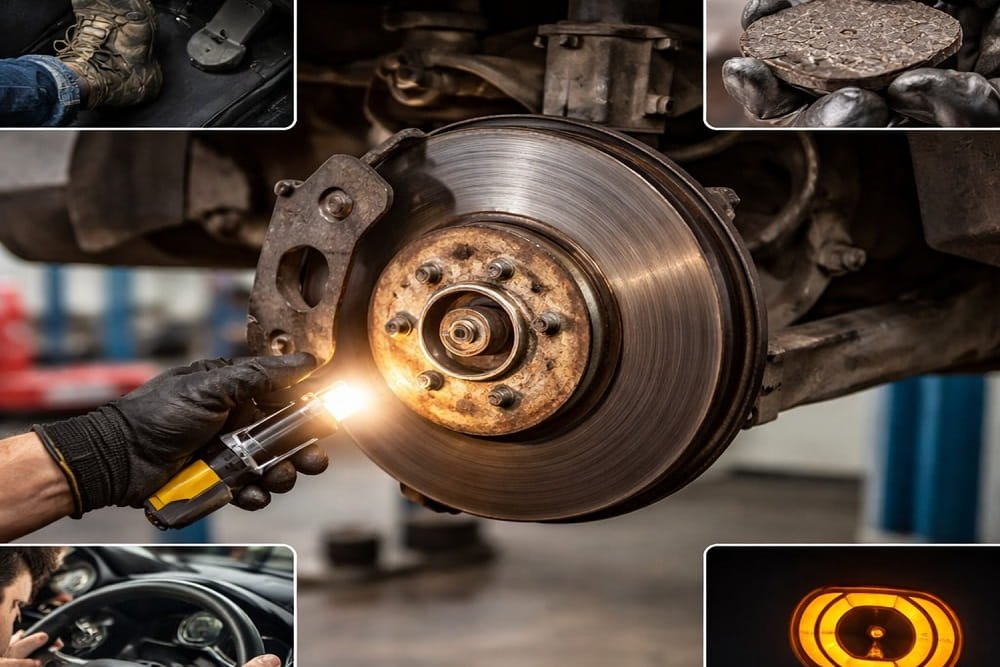
Your car’s braking system is, without question, the single most important safety feature on your vehicle. It stands between you and potentially life-threatening accidents. Yet, despite its critical importance, the braking system is one of the most neglected components by everyday car owners. Most drivers only think about their brakes when something has already gone seriously wrong — and by that point, the damage, danger, and cost are significantly higher than they needed to be.
The truth is, your car gives you plenty of warning signals before your brakes completely fail. These signs are your vehicle’s way of communicating with you — and knowing how to read them can save your life, protect your passengers, and keep repair costs manageable. At Exticon Auto, we believe that every car owner deserves to feel confident and safe behind the wheel, which is why we’ve put together this comprehensive guide to help you identify the top warning signs that your braking system needs immediate attention.
Whether you drive a Vauxhall, Opel, Saab, or any other European vehicle, this guide applies directly to you. Let’s dive in.
Why Brake Health Should Never Be Ignored
Before we get into the specific warning signs, it’s important to understand why brake health deserves your full attention. Brakes are a wear-and-tear component, meaning they degrade over time regardless of how carefully you drive. Factors like driving habits, road conditions, vehicle weight, and the quality of brake components all play a role in how fast your braking system wears down.
According to vehicle safety experts, faulty brakes are among the leading mechanical causes of road accidents globally. A braking system that is even slightly compromised can dramatically increase your stopping distance — turning a near-miss into a collision at high speeds. The difference between brakes in good condition and brakes that are 30% worn can mean several additional metres of stopping distance, which in an emergency situation, can be the difference between safety and disaster.
The good news? Brake problems rarely appear without warning. Here are the five most critical signs to watch out for.
Warning Sign #1: Squeaking, Squealing, or Grinding Noises
One of the most recognisable signs that your braking system needs attention is an unusual noise when you press the brake pedal. This could range from a high-pitched squeak or squeal to a deep, metallic grinding sound. Each of these noises signals a different level of urgency.
What the Squeaking Means
Most modern brake pads are designed with a small metal wear indicator — sometimes called a “squealer” — that intentionally creates a high-pitched sound when your brake pads have worn down to a critically low level. This is your car’s built-in early warning system. When you hear this squeak, it means you still have a small window of time to replace your pads before more serious damage occurs.
What the Grinding Means
A grinding or scraping noise is significantly more serious. This typically means your brake pads have worn down completely and the metal backing plate is now pressing directly against the metal brake disc (rotor). This metal-on-metal contact causes rapid damage to your rotors, dramatically reduces braking effectiveness, and results in a much costlier repair job. If you hear grinding, stop driving and seek professional help immediately.
Exticon Auto’s range of high-quality brake pads is engineered specifically for European vehicles and designed to give you clear, timely warning signals well before you reach the critical grinding stage. Replacing worn pads early with Exticon Auto components not only protects your rotors but can save you hundreds of pounds in repairs.
Warning Sign #2: Increased Stopping Distance
Have you noticed that your car seems to take longer to come to a complete stop than it used to? If you’re pressing the brake pedal and your vehicle doesn’t slow down as quickly as expected, this is a critical warning sign that should never be brushed aside.
Increased stopping distance — also known as brake fade — is often caused by one or more of the following issues:
- Worn brake pads that no longer provide adequate friction against the rotor.
- Contaminated or low brake fluid reducing hydraulic pressure.
- Warped or worn brake rotors that create uneven contact surfaces.
- Overheated braking components from extended or aggressive driving.
This issue becomes particularly dangerous in wet or icy conditions, where braking distances are already longer. A car that struggles to stop on dry tarmac can become almost impossible to control in the rain.
A practical test: In a safe, empty area, pay attention to how your car responds at moderate speeds when you apply firm but not emergency braking. If the response feels sluggish or noticeably different from what you’re accustomed to, it’s time to have your braking system professionally inspected. Exticon Auto offers a complete range of brake pads, discs, and fluid options to restore your vehicle’s braking performance to factory standards.
Warning Sign #3: Vibration or Pulsation When Braking
If you feel a shuddering, vibrating, or pulsating sensation through your brake pedal or steering wheel when you apply the brakes, this is a clear indicator that something is wrong with your braking system. This symptom is often jarring and unmistakable — the car may shudder as if the road is uneven even when driving on a smooth surface.
Warped Brake Rotors: The Most Common Culprit
In the vast majority of cases, vibration when braking is caused by warped brake rotors (also called discs). Rotors can warp due to extreme heat generated during heavy or prolonged braking — particularly if they are cooled too quickly afterwards, such as driving through a puddle immediately after hard braking. Rotors can also warp due to uneven torque when wheel bolts are tightened improperly.
When a rotor is warped, the brake pad cannot make consistent, even contact with the disc surface. Instead, it touches the high spots and skips over the low spots, creating that characteristic vibration. This not only makes for an uncomfortable and unsettling drive but also significantly reduces the braking system’s effectiveness.
Can Warped Rotors Be Fixed?
In some cases, lightly warped rotors can be machined (skimmed) back to a flat surface — but this is only viable if there is enough material remaining above the minimum thickness specification. In most cases, particularly on older or heavily used vehicles, rotor replacement is the safer and more cost-effective long-term solution. Exticon Auto’s precision-manufactured brake discs are engineered to strict tolerances, ensuring a flat, smooth braking surface and eliminating vibration from the first stop.
Warning Sign #4: Your Brake Warning Light Illuminates
Modern vehicles are equipped with sophisticated onboard diagnostic systems that monitor the health of critical components — including your brakes. If your dashboard displays a brake warning light (typically a red circle with an exclamation mark, or the letters “BRAKE”), your car is telling you directly that something requires immediate attention.
It’s important not to confuse the brake warning light with the handbrake (parking brake) indicator, which also illuminates when the handbrake is engaged. If the light comes on while you’re driving with the handbrake fully released, it’s a genuine warning that should not be ignored.
What Could Be Triggering the Brake Warning Light?
- Low brake fluid level — possibly indicating a leak in the system.
- Worn brake pads detected by electronic sensors (common on newer vehicles).
- ABS (Anti-lock Braking System) malfunction.
- A fault in the Electronic Brake Distribution (EBD) system.
Regardless of the underlying cause, a brake warning light is never something to dismiss or delay acting on. Even if your brakes feel fine, there could be an underlying issue that hasn’t yet manifested as a noticeable physical symptom. Have your vehicle inspected by a qualified mechanic as soon as possible, and ask them to verify whether your brake pads, discs, and fluid are within safe operating parameters.
Warning Sign #5: Visually Worn or Thin Brake Pads
One of the simplest and most overlooked ways to assess the health of your braking system is a basic visual inspection. You don’t need to be a mechanic to do this — it requires no special tools and takes less than five minutes.
How to Check Your Brake Pads Visually
Look through the spokes of your wheel at the brake caliper — the clamp-like component that squeezes the brake pad against the rotor. Between the caliper and the rotor, you should be able to see the brake pad itself. A healthy brake pad will have a friction material thickness of at least 6 to 8 millimetres. If the pad appears thin — less than 3 to 4 millimetres — it’s time to replace them. If you can barely see any friction material at all, replacement is urgent.
Additionally, look at the surface of the brake rotor (the large disc that the pad presses against). A healthy rotor surface should be relatively smooth with only minor surface grooves from normal use. Deep scoring, heavy rust, cracks, or uneven wear patterns are all signs that the rotor may need to be replaced alongside the pads.
As a general rule, it is always recommended to replace brake pads and rotors together as a set on the same axle. This ensures even, balanced braking across both wheels and avoids the uneven wear and pulling that can occur when one side is newer than the other. Exticon Auto offers convenient axle sets for most popular European car models, making it easy to get the right parts in one order.
Bonus Signs You Shouldn’t Ignore
Beyond the five major warning signs above, there are a few additional symptoms that indicate brake trouble:
- Car pulling to one side when braking: This suggests uneven brake pad wear or a stuck caliper on one side of the axle. This condition also strains your steering and suspension components.
- Spongy or soft brake pedal: If your brake pedal feels unusually soft or sinks towards the floor when pressed, there may be air in the brake lines or a hydraulic fluid leak. This is an emergency situation — do not drive the vehicle until it has been inspected.
- Burning smell after driving: A sharp, acrid chemical smell after heavy braking or on steep downhill stretches can indicate overheated brakes or a stuck caliper. Pull over safely and allow the brakes to cool before continuing.
- Brake pedal pulsation at highway speeds: If you feel a rhythmic pulsation only at higher speeds and not at lower ones, this often points to rotor runout — a slight wobble in the rotor as it spins — which will worsen over time if not addressed.
How Often Should You Replace Your Brake Components?
There is no universal answer to this question, as brake lifespan varies enormously depending on your driving style, the type of roads you drive on, and the quality of the brake components fitted to your vehicle. However, as a general guideline:
- Brake pads: Typically last between 30,000 and 70,000 miles, though city drivers may see pads wear out closer to the lower end due to frequent stop-start driving.
- Brake rotors/discs: Generally last between 50,000 and 80,000 miles, depending on quality and usage.
- Brake fluid: Should be replaced every 2 years or every 30,000 miles, as it absorbs moisture over time which lowers its boiling point and reduces effectiveness.
These are general estimates only. Always follow your vehicle manufacturer’s recommendations, and have your brakes inspected as part of every routine service. Drivers who frequently tow, carry heavy loads, or drive in mountainous terrain should check their brakes more regularly.
Why Choose Exticon Auto for Your Braking Needs?
When it comes to replacing your brake components, the quality of the parts you choose matters enormously. Using low-quality, non-compliant brake parts can compromise your safety and result in premature wear, poor performance, and even brake failure.
Exticon Auto is trusted by car owners and independent garages across the UK and Europe for a simple reason: their parts are built to perform. Here is what sets Exticon Auto apart:
- Precision Engineering: Every Exticon Auto brake component is manufactured to exacting standards, ensuring a precise fit and consistent performance across a wide range of European vehicle makes and models.
- Wide Compatibility: Exticon Auto products are compatible with popular European brands including Vauxhall, Opel, Saab, and many others, making it easy to find the right part for your vehicle.
- Affordable Pricing: Safety shouldn’t have to break the bank. Exticon Auto offers premium-quality brake components at competitive prices, making it accessible for all car owners to maintain their vehicles properly.
- Comprehensive Product Range: From brake pads and discs to oil filters and other service components, Exticon Auto provides everything you need to keep your vehicle in top condition.
Final Thoughts: Don’t Wait Until It’s Too Late
Your brakes are not just a mechanical component — they are your car’s most critical safety system. Ignoring the warning signs outlined in this guide is never worth the risk. The cost of replacing worn brake pads or warped rotors early is always significantly less than the cost of emergency repairs, insurance claims, or worse, the human cost of an accident that could have been prevented.
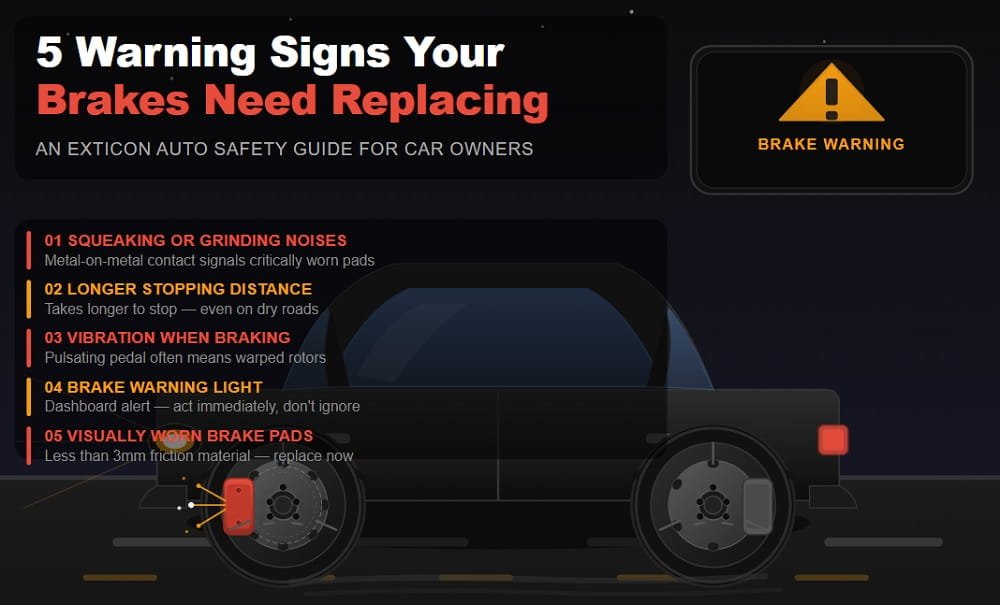
To summarise, here are the five warning signs to watch for:
- Squeaking, squealing, or grinding noises when braking.
- Longer stopping distances than normal.
- Vibration or pulsation through the pedal or steering wheel.
- The brake warning light appearing on your dashboard.
- Visually thin or worn brake pads or scored rotors.
If you’ve noticed any of these signs, don’t delay. Browse Exticon Auto’s full range of braking components today and give your car — and yourself — the safety it deserves. Whether you need a full brake pad and disc replacement kit or just a single component, Exticon Auto has you covered with quality parts that are built to last and designed to perform.
Stay safe. Brake smart. Trust Exticon Auto. Don’t forget to subscribe TrendsBuzzer.
Disclaimer: The information in this article is intended as general guidance only. Always consult a qualified mechanic for professional diagnosis and repair of your vehicle’s braking system.

